

Wet wipes have become an essential product in modern daily life. From baby care and facial cleansing to household disinfection, industrial cleaning, and travel hygiene, wet wipes are widely used across homes, hospitals, restaurants, gyms, airlines, and commercial facilities. The global wet wipes industry continues to grow rapidly due to increasing awareness of convenience, sanitation, and personal care.
Today's consumers expect wet wipes to deliver softness, durability, moisture retention, skin safety, and effective cleaning performance. As a result, wet wipe manufacturing has evolved into a highly automated and precision-controlled industry that combines nonwoven fabric technology, liquid formulation engineering, automated converting systems, and hygienic packaging solutions.
Whether you are a brand owner, importer, distributor, or OEM buyer, understanding how wet wipes are made can help you choose the right manufacturer and improve product quality, packaging performance, and supply chain stability.

What Are Wet Wipes?
Wet wipes are disposable nonwoven cloths pre-moistened with a specially formulated liquid solution. They are designed for cleaning, disinfecting, moisturizing, or refreshing skin and surfaces.
Unlike traditional tissues or paper towels, wet wipes combine advanced nonwoven fabrics with carefully balanced lotion formulas to provide better softness, absorbency, durability, and convenience.
Common wet wipe categories include:
Makeup remover wipes
Personal hygiene wipes
Antibacterial wipes
Kitchen disinfecting wipes
Medical wipes
Industrial cleaning wipes
The manufacturing process varies depending on the wipe application, fabric type, liquid formula, and packaging requirements.
Main Materials Used in Wet Wipes Manufacturing
The quality of wet wipes starts with raw materials. Manufacturers carefully select nonwoven substrates and wetting solutions based on the intended product application.
| Material Type | Main Features | Typical Applications |
|---|---|---|
| Spunlace Nonwoven | Soft, durable, absorbent | Baby wipes, facial wipes |
| Airlaid Fabric | Lightweight, high absorbency | Cleaning wipes |
| Meltblown Fabric | Strong filtration capability | Disinfecting wipes |
| Cotton Fiber | Natural and skin-friendly | Premium skincare wipes |
| Bamboo Fiber | Sustainable and soft | Eco-friendly wipes |
| Wood Pulp | Biodegradable | Flushable wipes |
According to industrial manufacturing references, spunlace nonwoven remains the most commonly used substrate because it offers an excellent balance of softness, strength, and liquid absorption.
What Is the Liquid Inside Wet Wipes?
The wetting solution is another critical part of the production process. Most wet wipe formulas are primarily composed of purified water combined with functional ingredients.
Common ingredients include:
Purified or deionized water
Mild surfactants
Skin moisturizers
Aloe vera or vitamin E
Preservatives
Fragrances
Antibacterial agents
Alcohol or quaternary ammonium compounds
Different wipe categories require different formulations. Baby wipes focus on skin safety and hypoallergenic performance, while disinfecting wipes prioritize antibacterial effectiveness.
Step-by-Step Wet Wipes Manufacturing Process
Raw Material Preparation
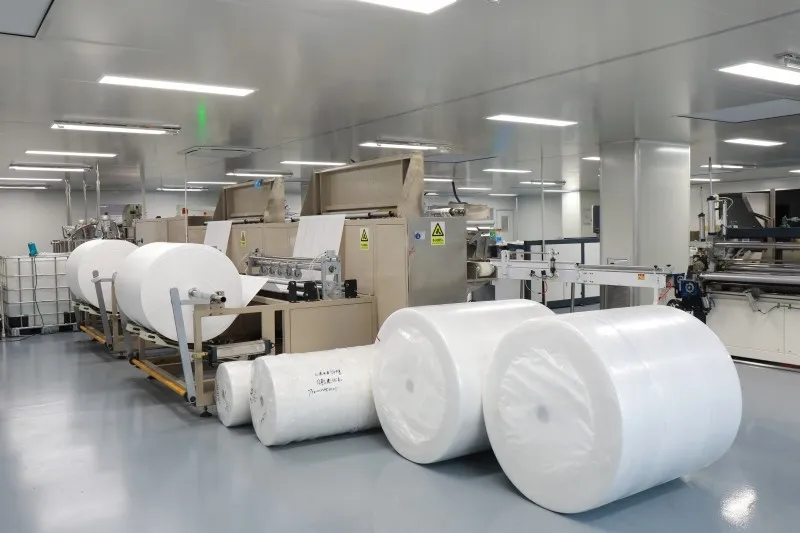
The production process begins with jumbo rolls of nonwoven fabric. These large master rolls are loaded onto automated converting lines.
Manufacturers inspect the raw materials for:
Fabric weight consistency
Tensile strength
Softness
Absorbency
Cleanliness
Fiber composition
High-quality raw materials are essential for maintaining stable wipe performance during large-scale production.
Wetting Solution Mixing
In a separate mixing system, purified water is blended with active ingredients to create the wet wipe lotion.
Industrial mixing tanks use automated control systems to ensure:
Stable pH value
Uniform viscosity
Correct ingredient concentration
Microbial safety
Consistent fragrance performance
Quality control laboratories test every batch before it enters the production line.
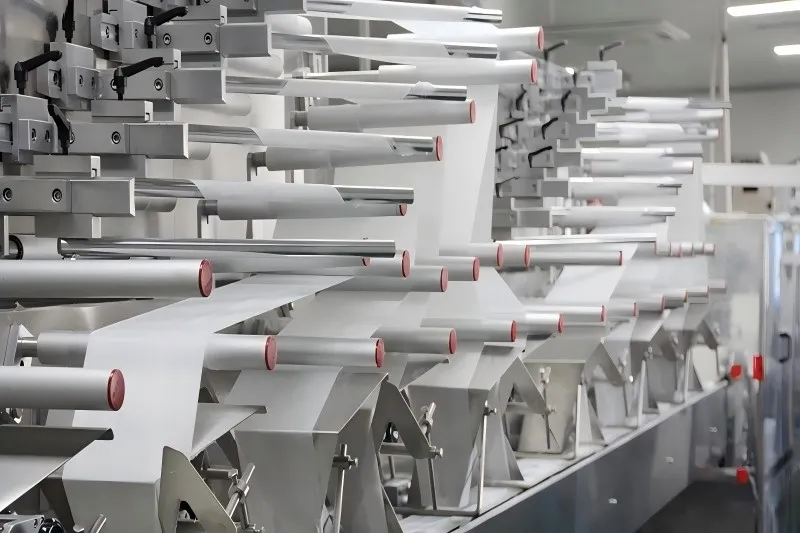
Fabric Slitting and Folding
The nonwoven master roll is unwound and cut into smaller widths based on wipe size requirements.
Automated folding systems then convert the fabric into different fold types
| Fold Type | Features | Common Usage |
|---|---|---|
| Z Fold | Easy pop-up dispensing | Soft packs |
| C Fold | Compact stacking | Personal care wipes |
| Quarter Fold | Larger folded size | Industrial wipes |
| Cross Fold | Continuous dispensing | Canister wipes |
Modern wet wipe production lines can run multiple lanes simultaneously to achieve high-speed manufacturing efficiency.

Wetting and Saturation
After folding, the dry wipes pass through the liquid dosing system.
The lotion is evenly applied using:
Spray nozzles
Saturation rollers
Metering pumps
Precision dosing systems
The goal is to maintain accurate moisture levels without excessive dripping or dry spots.
Automated sensors continuously monitor wipe weight and liquid consistency during production. This ensures every wipe maintains the same user experience.
Cutting and Counting
The wet wipe web is then cut into individual sheets.
Automated counting systems organize the wipes into predetermined pack quantities such as:
10 wipes
20 wipes
40 wipes
80 wipes
100 wipes
High-speed lines can process thousands of wipes per minute while maintaining dimensional accuracy and cleanliness.
Packaging and Sealing
Packaging is one of the most important stages in wet wipe production because it directly affects moisture retention and shelf life.
Common packaging formats include
| Packaging Type | Advantages | Typical Products |
|---|---|---|
| Soft Packs | Lightweight and portable | Baby wipes |
| Plastic Canisters | Excellent moisture retention | Disinfecting wipes |
| Refill Packs | Cost-effective | Household wipes |
Heat sealing systems protect the wipes from contamination and moisture loss.
Advanced packaging machines also support:
Flip-top lid application
Labeling
Barcode printing
Batch coding
Automatic cartoning
Different Types of Wet Wipes and Their Manufacturing Differences
Baby Wipes
Baby wipes prioritize softness, skin safety, and hypoallergenic formulations.
Manufacturers usually use:
Spunlace nonwoven
Alcohol-free formulas
Fragrance-free options
Dermatologically tested ingredients
These wipes require strict microbial control during production.
Antibacterial Wipes
Antibacterial wipes contain active disinfecting ingredients designed to kill bacteria and viruses.
Production requirements include:
Precise active ingredient concentration
Regulatory compliance
Controlled saturation systems
Enhanced packaging barriers
These wipes are commonly used in hospitals, offices, schools, and gyms.
Flushable Wipes
Flushable wipes are designed to break down in water systems.
Manufacturers typically use:
Wood pulp fibers
Biodegradable materials
Specialized wet strength control
The production process requires delicate tension control because biodegradable fabrics are more fragile during wet processing.
Industrial Cleaning Wipes
Industrial wipes are designed for heavy-duty cleaning applications.
These wipes often feature:
Larger sheet sizes
Stronger nonwoven materials
High absorbency
Chemical-resistant formulations
Applications include automotive, machinery maintenance, electronics cleaning, and manufacturing plants.
Modern Wet Wipes Manufacturing Equipment
Modern factories use highly automated production systems to maximize output and maintain hygiene standards.
Typical wet wipe production equipment includes
| Equipment | Function |
|---|---|
| Nonwoven Unwinder | Feeds jumbo fabric rolls |
| Slitting Machine | Cuts fabric into lanes |
| Folding Machine | Creates wipe fold patterns |
| Lotion Mixing Tank | Prepares wetting solution |
| Saturation System | Applies liquid evenly |
| Packaging Machine | Seals finished packs |
| Labeling Machine | Applies branding labels |
| Cartoning System | Packs products into cartons |
Automation helps manufacturers improve:
Production speed
Quality consistency
Labor efficiency
Hygiene control
Material utilization


Why OEM Wet Wipes Manufacturing Is Growing
Private label wet wipes have become increasingly popular among retailers, supermarkets, skincare brands, medical suppliers, and e-commerce companies.
OEM wet wipe manufacturing offers advantages such as:
Custom formulations
Private label branding
Flexible packaging options
Lower production costs
Faster market entry
Customized fragrance and materials
Many global brands rely on experienced OEM factories to scale production efficiently while maintaining consistent quality.
Why Choose Aijian Wet Wipes Manufacturer
Zhejiang Aijian Sanitary Products Technology Co., Ltd. is an experienced OEM and ODM wet wipes manufacturer specializing in personal care, baby care, healthcare, household cleaning, and pet wipe solutions.
Founded in 2002, the company operates modern automated production facilities equipped with advanced wet wipe converting lines and strict quality management systems.
Aijian provides a wide range of customized wet wipe solutions including:
Baby wipes
Makeup remover wipes
Adult wipes
Antibacterial wipes
Pet wipes
Household cleaning wipes
Dry wipes
Personal care wipes
The company supports flexible OEM/ODM services including
| Service | Details |
|---|---|
| Custom Formula | Fragrance, ingredients, functionality |
| Packaging Design | Labels, lids, soft packs, sachets |
| Private Label Production | Full OEM branding support |
| Material Customization | Spunlace, cotton, bamboo options |
| Bulk Manufacturing | Large-scale production capacity |
| Export Support | International packaging standards |
Aijian focuses on stable product quality, efficient production management, and long-term customer cooperation for global buyers seeking reliable wet wipe manufacturing partners.

Wet Wipes Industry Trends
The wet wipes market continues to evolve with increasing demand for:
Skin-friendly formulations
Alcohol-free wipes
Multi-purpose cleaning wipes
Premium personal care wipes
Biodegradable materials
Custom private label products
Portable travel packaging
Global demand from healthcare, hospitality, fitness, and household cleaning sectors remains strong.
Discussions across manufacturing and wholesale communities also show growing interest in OEM partnerships, international distribution, and customized wet wipe production services.
How to Choose a Reliable Wet Wipes Manufacturer
When sourcing wet wipes, buyers should evaluate suppliers based on several important factors.
| Evaluation Factor | Why It Matters |
|---|---|
| Production Capacity | Stable large-volume supply |
| Quality Control | Product consistency |
| OEM Experience | Better customization capability |
| Certification Standards | Export compliance |
| Packaging Capability | Brand presentation |
| Delivery Stability | Reduced supply chain risk |
| R&D Support | Faster product development |
Working with an experienced manufacturer can significantly improve product reliability and brand competitiveness.
Conclusion
Wet wipe manufacturing is a highly specialized process that combines nonwoven fabric engineering, liquid formulation science, automated production systems, and hygienic packaging technology.
From baby wipes and personal care wipes to industrial disinfecting products, modern wet wipes must deliver safety, softness, durability, and convenience while meeting increasingly demanding market expectations.
As global demand continues to grow, choosing the right OEM manufacturing partner becomes essential for brands seeking long-term success in the wet wipes industry.
Manufacturers like Aijian continue to help international buyers develop customized wet wipe solutions with reliable production capacity, flexible OEM services, and professional export support.
FAQ About Buying Wet Wipes
What is the best material for wet wipes?
Spunlace nonwoven is widely considered one of the best materials because it combines softness, durability, and strong absorbency. Cotton and bamboo materials are also popular for premium products.
Can wet wipes be customized for private label brands?
Yes. Professional OEM manufacturers can customize formulations, fragrances, packaging, sheet sizes, materials, and branding according to customer requirements.
What certifications should a wet wipes manufacturer have?
Reliable manufacturers typically operate under international quality management systems and maintain strict hygiene standards for export production.
What packaging options are available for wet wipes?
Common packaging options include soft packs, flip-top packs, canisters, refill packs.
How long does wet wipes production usually take?
Production timelines depend on formula customization, packaging complexity, order quantity, and raw material availability. Experienced manufacturers can usually provide stable lead times for bulk orders.


