

When it comes to baby care, a good wipe should do more than clean. It should combine suitable materials, a carefully developed formula, and reliable quality control to support everyday hygiene."
Baby wipes are an essential product for diaper changes, feeding cleanup, and everyday infant care. However, parents, retailers, importers, and private label brands increasingly want to know what baby wipes are made of and whether their ingredients are actually safe for delicate skin. The answer depends on several factors, including the nonwoven fabric, cleansing solution, preservatives, fragrance, manufacturing process, and packaging quality.
For baby wipes manufacturers and wholesale buyers, understanding these components is equally important. The right combination of fabric and lotion affects softness, durability, moisture retention, and cleaning performance. It also helps brands develop products that meet the needs of different markets.
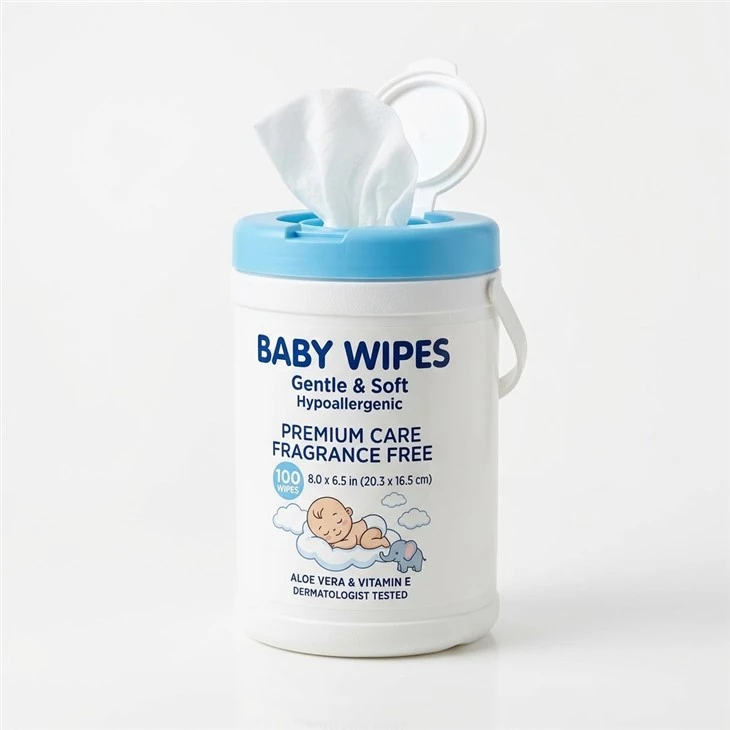
What Are Baby Wipes Made Of?
Most baby wipes consist of two main components: a nonwoven fabric substrate and a water-based cleansing solution. Some products also include moisturizing agents, preservatives, pH adjusters, and optional botanical extracts.
The fabric provides the physical structure of the wipe, while the liquid formula helps remove dirt, milk residue, and other everyday impurities. Both components must be selected according to the intended application and target consumer.
| Component | Common Materials or Ingredients | Main Function |
|---|---|---|
| Nonwoven fabric | Spunlace viscose, polyester blends, cotton-based fibers | Provides softness, strength, and absorbency |
| Main liquid base | Purified water | Supports gentle cleansing and distributes other ingredients |
| Humectants | Glycerin, propanediol | Help retain moisture and improve skin feel |
| Cleansing agents | Mild surfactants, where appropriate | Help lift dirt and residues |
| Preservatives | Suitable cosmetic preservatives | Help control microbial growth in the product |
| pH adjusters | Citric acid, citrate-based ingredients | Help maintain the intended formula pH |
| Optional botanical ingredients | Aloe vera extract, chamomile extract | Support specific product positioning, depending on the formula |
| Fragrance | Fragrance ingredients or no added fragrance | Provides a scent when included |
Not every baby wipe contains all these ingredients. Formulations vary by manufacturer, market requirements, product positioning, and intended use. Buyers should always review the actual ingredient list rather than assume that every product with the same product name has an identical composition.
What Materials Are Used in Baby Wipes Fabric?
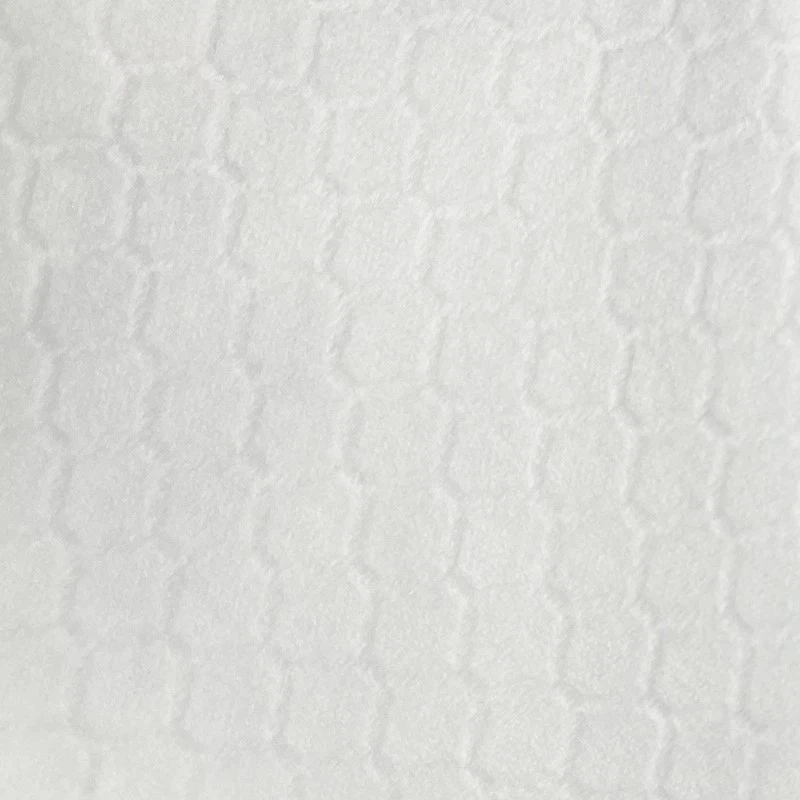
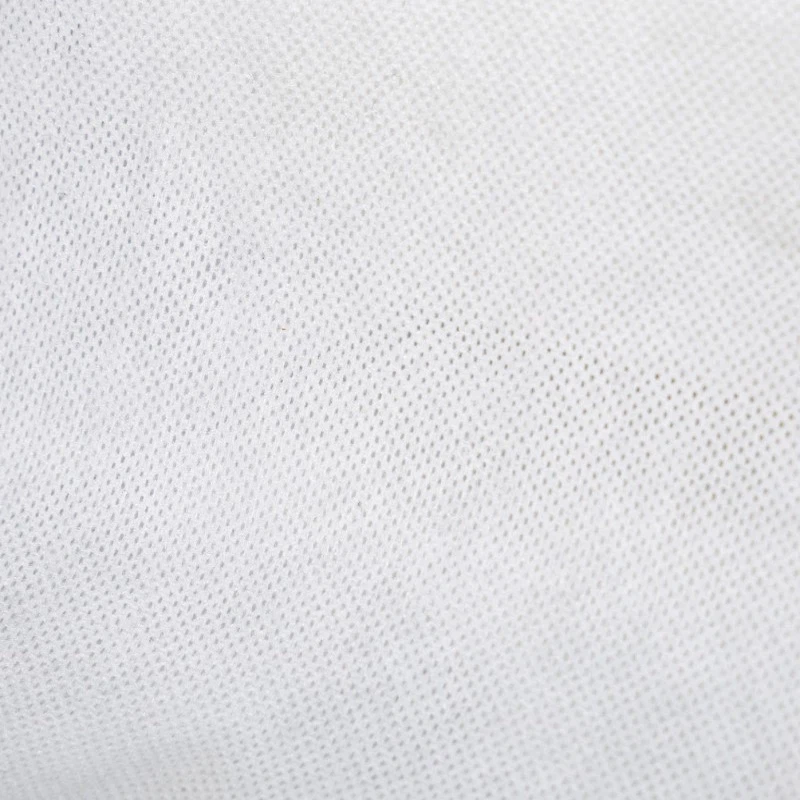
The nonwoven substrate plays a major role in the overall performance of baby wipes. It determines how the wipe feels against the skin, how much liquid it holds, how easily it tears, and how effectively it removes everyday dirt.
Spunlace nonwoven fabric is widely used in baby wipes because it can provide a soft surface, good liquid absorption, and suitable tensile strength. High-quality spunlace fabric can be engineered with different fiber blends, weights, and surface textures to meet the needs of standard, premium, and sensitive-skin product lines.
For wholesale baby wipes buyers, fabric selection should consider softness, thickness, wet strength, linting, and cost per finished pack. A fabric that feels soft when dry may perform differently after being saturated with lotion, so evaluating the finished product is important.
Viscose is commonly used in soft nonwoven fabrics because it absorbs water effectively and provides a comfortable touch. Cotton-based materials may also be selected for brands targeting a more natural product image.
However, the fiber source alone does not establish whether a wipe is safe, biodegradable, or suitable for sensitive skin. The finished fabric structure, chemical processing, liquid formula, and applicable testing requirements all matter.
Some baby wipes use blended fibers to improve strength, dimensional stability, or manufacturing efficiency. Alternative fibers may also be considered for products targeting particular sustainability goals.
Buyers developing eco-conscious baby wipes should confirm the exact fiber composition and obtain supporting evidence for claims such as biodegradable, compostable, or plastic-free. These terms are not interchangeable, and a natural-looking material does not automatically meet every environmental standard.


What Is Inside the Liquid Used in Baby Wipes?
The liquid formula is another important factor when evaluating baby wipes safety. Although many products use purified water as the primary ingredient, water alone does not necessarily provide sufficient preservation for a wipe that remains moist throughout its shelf life.
Purified water is commonly used as the main liquid component. It provides the base for distributing other ingredients and helps remove everyday residues from the skin. Water quality and hygienic handling are important throughout production because contaminated water or equipment can compromise the finished product.
Ingredients such as glycerin may be added to improve moisture retention and skin feel. The concentration needs to be appropriate for the product because an overly sticky or poorly balanced formula can affect the user's experience.
Preservatives help protect water-based products against microbial contamination during storage and use. Their selection should comply with the regulations applicable to the intended market and product category.
A preservative-free claim should not be treated as automatic evidence of better safety. Manufacturers need an appropriate preservation strategy supported by suitable product safety and stability assessments.
Some baby wipes contain fragrance or botanical extracts to support particular consumer preferences. Others are formulated without added fragrance for buyers seeking a simpler ingredient profile.
Natural extracts are not automatically non-irritating, and fragrance-free products are not guaranteed to be suitable for every individual. Brands should assess the complete formulation and consider relevant skin compatibility testing before making claims about sensitive-skin suitability.
Are Baby Wipes Actually Safe for Babies?
Baby wipes can be suitable for routine infant cleaning when they are properly formulated, manufactured, stored, and used as directed. However, safety cannot be determined by the product name or a single ingredient claim alone.
Several factors should be considered when evaluating baby wipes for newborns and infants.
A well-designed baby wipes formula should be appropriate for its intended use and target age group. Buyers should review the full ingredient list, assess fragrance and cleansing agents, and request relevant safety documentation from the manufacturer.
Products marketed for sensitive skin should have evidence supporting those claims. Parents should stop using a wipe if it causes persistent redness, discomfort, or other signs of irritation and seek professional advice when necessary.
Because baby wipes contain water, microbial quality is a critical consideration. Manufacturing hygiene, water treatment, equipment sanitation, preservation, and packaging integrity all contribute to finished-product quality.
A professional baby wipes factory should maintain documented quality procedures and use appropriate testing to verify that products meet their defined specifications.
Packaging protects wipes from external contamination and helps prevent moisture loss. Resealable soft packs, flip-top baby wipes packs, and canisters each have different dispensing and storage characteristics.
Buyers should evaluate closure performance, seal integrity, wipe extraction, and moisture retention during product testing. A suitable package should help preserve the intended product condition throughout normal use.
Even well-formulated baby wipes should be used according to the label. Keep packages closed between uses, follow the manufacturer's storage instructions, and avoid using products that have changed in appearance or smell or have damaged packaging.
Baby wipes intended for external cleansing should not be assumed to be sterile or suitable for every medical application. They should also not be used as a substitute for medical treatment when a baby has a persistent skin condition.
Baby Wipes Safety Comparison: What Should Buyers Check?
For importers, distributors, retailers, and private label brands, product evaluation should go beyond the marketing description. The following checklist can help procurement teams compare baby wipes suppliers more systematically.
| Evaluation Item | What to Check | Why It Matters |
|---|---|---|
| Fabric composition | Fiber type, fabric weight, softness, wet strength | Affects comfort and product durability |
| Formula | Full ingredient list and intended use | Helps assess suitability for the target market |
| Fragrance | Fragranced or fragrance-free formulation | Supports different customer preferences |
| Microbial quality | Relevant microbiological test results | Helps verify product hygiene |
| Skin compatibility | Appropriate safety assessment and supporting tests | Supports responsible product claims |
| Packaging | Seal integrity, dispensing, moisture retention | Helps maintain product condition |
| Regulatory documents | Market-specific documentation and labeling | Supports import and market-entry planning |
| Batch consistency | Specifications, inspection records, traceability | Helps maintain consistent product quality |
No single certificate or laboratory report proves that a product is suitable for every baby or every market. Buyers should confirm the scope, validity, and relevance of documentation rather than relying on a logo or a general safety statement.
Different Types of Baby Wipes for Retail and Private Label Brands
Baby wipes are available in several formats to meet different consumer preferences and distribution requirements. Selecting the right product configuration can help brands differentiate their offerings and manage packaging costs.
Water-based baby wipes are designed for everyday cleansing, including diaper changes, hand cleaning, and wiping the face when the product label permits. Buyers can specify the fabric, lotion characteristics, wipe dimensions, and pack count according to the intended market.
Fragrance-free baby wipes are suitable for brands that prefer to avoid added fragrance. They can be positioned around a simple ingredient profile, although the final formulation still requires appropriate safety and quality evaluation.
Flip-top baby wipes use a resealable lid to make repeated dispensing more convenient. This packaging format is useful for household use and retail products where moisture retention and ease of access are important.
Canister baby wipes are designed for organized storage and repeated use. They can be considered for nursery settings, childcare facilities, or retail product lines that prioritize a structured dispensing format.
Private label baby wipes allow brands and distributors to develop products under their own labels. Depending on the manufacturer's capabilities, customization may cover fabric materials, formula options, wipe size, pack count, packaging structure, and label artwork.
For B2B buyers, the most suitable product is not necessarily the one with the longest ingredient list. It is the product that matches the target market, meets relevant requirements, performs consistently, and can be supplied at the required commercial scale.
How to Choose a Reliable Baby Wipes Manufacturer
Selecting a baby wipes manufacturer requires an assessment of production capability, quality management, customization flexibility, and communication efficiency. A supplier should be able to explain how the product is developed and how quality is controlled from raw material sourcing through final shipment.
Before placing a bulk order, buyers should consider the following:
Manufacturing capability: Confirm whether the supplier operates its own production facility and can support the required order volume.
Material and formula options: Ask which fabrics, lotion formulations, and packaging formats are available.
Quality documentation: Request relevant specifications, test reports, and market-specific compliance documents.
Sampling and approval: Evaluate samples for softness, moisture level, durability, scent, and dispensing performance.
Minimum order quantity: Confirm the MOQ for the selected pack format, formulation, and private label design.
Production and delivery schedule: Agree on sampling, artwork approval, production lead time, and shipping arrangements.
Batch consistency: Establish clear product specifications and inspection criteria before mass production.
A structured supplier evaluation helps reduce avoidable issues and gives both parties a clearer basis for long-term cooperation.
Aijian: An Experienced OEM Baby Wipes Manufacturer in China
Zhejiang Aijian Sanitary Products Technology Co., Ltd. is a professional wet wipes manufacturer established in 2002. With more than two decades of industry experience, Aijian provides OEM and ODM manufacturing services for international brands, wholesalers, distributors, and private label businesses.
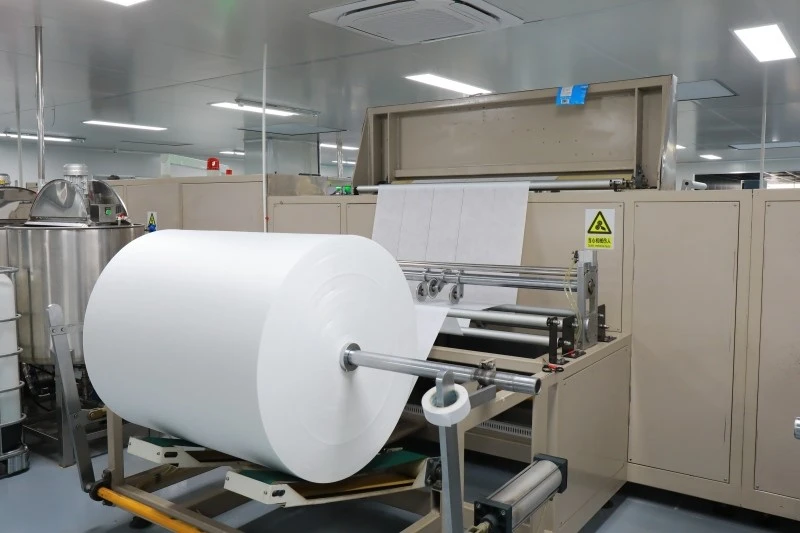
According to its official website, Aijian operates four high-speed production lines with a monthly output of more than two million packs. Its product portfolio covers baby wipes, personal care wipes, adult hygiene wipes, and other customized wet and dry wipe products.
Aijian supports product development according to customer requirements, including nonwoven fabric selection, liquid formulation options, wipe specifications, and packaging design. This allows buyers to develop products for different retail channels and market positions rather than relying exclusively on standard off-the-shelf specifications.
Depending on the project, buyers can discuss fragrance-free formulations, suitable moisturizing ingredients, fabric weight, wipe dimensions, pack count, and packaging formats. Final options should be confirmed against the intended application, available production specifications, and applicable regulations.
Aijian's production scale supports wholesale and private label projects that require repeat orders and consistent supply. The company's website lists quality and management credentials including ISO, GMPC, FDA-related documentation, and SGS among its relevant certifications or qualifications. Buyers should confirm the exact certificates, test reports, product scope, and regulatory applicability required for their destination market.
Quality management should extend beyond the finished wipe itself. Raw material selection, water quality, formula preparation, production hygiene, packaging integrity, and final inspection all influence the consistency of baby wipes supplied to international customers.
For brands entering the baby care category, Aijian offers a one-stop approach to customized wet wipes manufacturing. Buyers can discuss product requirements, approve samples, confirm packaging artwork, and establish specifications before mass production.
The published MOQ for Aijian's standard baby wipes offering starts at 10,000 packs per batch, although the final MOQ should be confirmed for the selected product configuration. This makes early clarification of pack count, fabric specifications, formula requirements, and labeling needs important for cost planning.
By combining manufacturing experience, product customization, and production capacity, Aijian helps business customers develop baby wipes products aligned with their commercial objectives and target markets.

Conclusion: What Should You Know About Baby Wipes Safety?
Baby wipes are generally made from a nonwoven fabric saturated with a water-based cleansing solution. Their performance and suitability depend on the complete product design, including fiber composition, formula ingredients, preservation, manufacturing hygiene, and packaging.
For consumers, choosing a suitable product means checking the ingredient list, following the label, and paying attention to signs of irritation. For importers and private label brands, it means assessing the manufacturer, requesting relevant quality documentation, testing samples, and confirming compliance with the destination market's requirements.
If you are sourcing baby wipes for wholesale or developing your own brand, working with an experienced OEM baby wipes manufacturer can simplify material selection, formula development, packaging customization, and production planning. Zhejiang Aijian Sanitary Products Technology Co., Ltd. provides customized wet wipes manufacturing solutions for businesses seeking a reliable supply partner.
Contact Aijian to discuss your baby wipes specifications, packaging requirements, and private label project.


