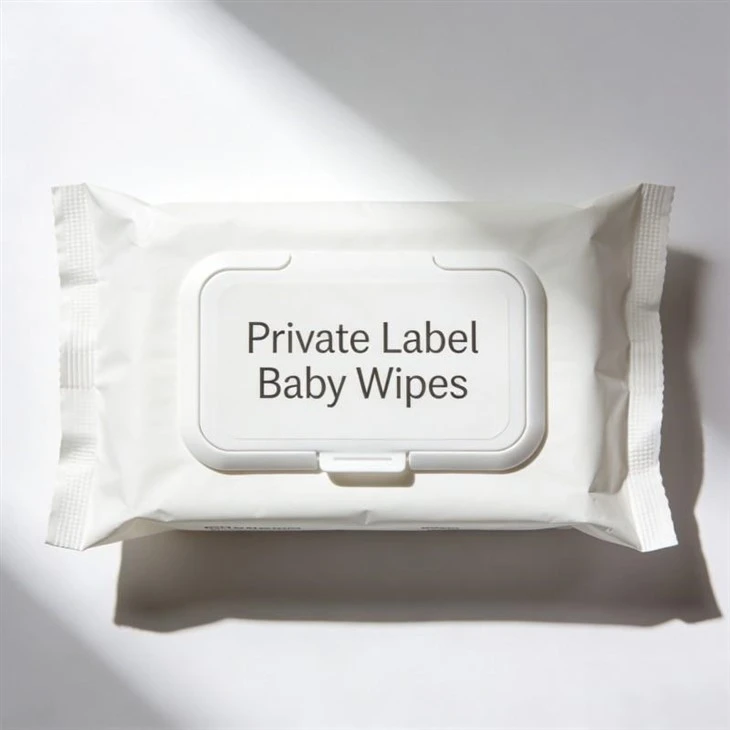
The quality of a wet wipe is determined long before it reaches the consumer. The right combination of fabric, liquid formulation and packaging is what makes a wipe effective, comfortable to use and suitable for its intended application.Wet wipes have become an essential part of everyday hygiene, personal care and commercial cleaning. From baby wipes and facial cleansing wipes to adult care wipes, antibacterial wipes and household cleaning products, different applications require different combinations of materials and formulations.
For importers, distributors, private label brands and wholesale buyers, understanding what wet wipes are made of is an important step in product sourcing. The nonwoven fabric affects softness, strength and absorbency, while the liquid formula determines cleaning performance and skin compatibility. Packaging also plays an important role in maintaining moisture, protecting the product and improving the user experience.
So, what are wet wipes made of? Generally, a wet wipe consists of three main components: a nonwoven fabric substrate, a liquid solution and protective packaging. Each component can be adjusted according to the product category, target market and purchasing requirements.

What Are Wet Wipes Made Of?
Most wet wipes consist of three fundamental components:
Nonwoven fabric: The physical substrate that forms the wipe.
Liquid formulation: The cleansing or moisturizing solution absorbed into the fabric.
Packaging: The protective structure that retains moisture and supports storage and distribution.
Each component needs to match the intended application. For example, baby wipes require different formulation considerations from household cleaning wipes, while makeup remover wipes may need a fabric structure that supports effective makeup removal without excessive friction.
Main Components of Wet Wipes
| Component | Common Materials | Main Function |
|---|---|---|
| Nonwoven fabric | Spunlace viscose, polyester, wood pulp, cotton, bamboo fiber | Provides softness, strength, absorbency, and wiping performance |
| Liquid formulation | Purified water, humectants, surfactants, preservatives, pH adjusters | Supports cleansing, moisture retention, and product stability |
| Packaging | Plastic flow packs, resealable labels, rigid containers, individual sachets | Protects wipes from contamination and moisture loss |
The proportion and selection of these components vary according to product positioning, target consumers, regulatory requirements, and manufacturing specifications.
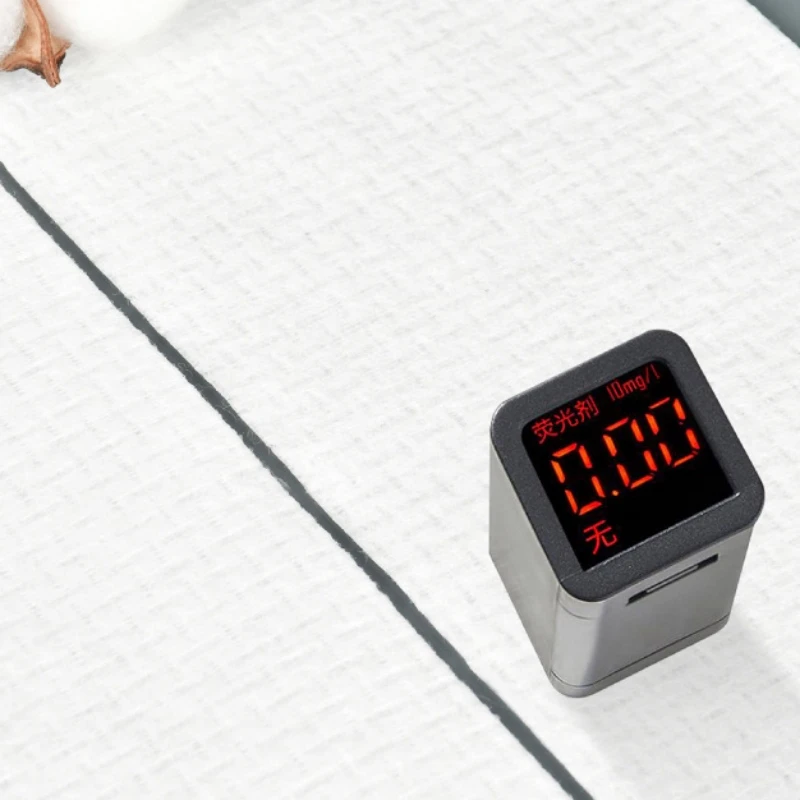
What Fabrics Are Used in Wet Wipes?
Nonwoven fabric is the foundation of most wet wipes. Unlike traditional woven textiles, nonwoven materials are manufactured by bonding fibers through mechanical, thermal, or chemical processes.
For wet wipes, spunlace nonwoven fabric is widely used because its structure can provide a combination of softness, absorbency, and tensile strength.
However, not all nonwoven fabrics perform in the same way. Fiber composition, fabric weight, surface structure, and bonding methods all influence the final product.
Common Wet Wipe Fabric Materials
| Fabric Material | Key Characteristics | Typical Applications |
|---|---|---|
| Viscose | Soft, absorbent, and suitable for liquid retention | Baby wipes, facial wipes, personal care wipes |
| Polyester | Good tensile strength and dimensional stability | Household wipes, cleaning wipes |
| Wood Pulp | Cellulose-based fiber with good absorbency | Dry wipes, cleaning wipes, selected wet wipes |
| Cotton | Natural fiber with a soft hand feel | Premium personal care and cosmetic wipes |
| Bamboo Fiber | Plant-derived fiber used in selected nonwoven blends | Personal care and environmentally positioned wipes |
| Viscose and Polyester Blend | Combines absorbency with improved strength | General-purpose wet wipes |
How to Choose the Right Nonwoven Fabric
Viscose Nonwoven Fabric
Viscose is commonly selected for products where softness and liquid absorption are important. Its fiber structure supports moisture retention, making it suitable for baby wipes, facial cleansing wipes, and body wipes.
Polyester Nonwoven Fabric
Polyester contributes tensile strength and structural stability. It is often blended with viscose to balance softness, absorbency, and durability during use.
Wood Pulp Nonwoven Fabric
Wood pulp-based materials are used in various disposable wiping products. Depending on the manufacturing process and fiber combination, they can provide different levels of absorbency and surface texture.
Cotton and Bamboo-Based Materials
Cotton and bamboo-based fibers are used in selected product lines to meet specific material preferences. Buyers should evaluate the actual fiber composition rather than relying solely on general descriptions such as natural or eco-friendly.
What Is GSM in Wet Wipes?
GSM stands for grams per square meter. It measures the weight of nonwoven fabric and is one of the key technical specifications when purchasing wet wipes.
| Fabric Weight | General Material Characteristics | Potential Applications |
|---|---|---|
| 30–40 GSM | Lightweight and flexible | Lightweight daily-use wipes |
| 40–50 GSM | Balanced thickness and handling | Standard baby and personal care wipes |
| 50–70 GSM | More substantial fabric structure | Adult wipes and premium cleansing wipes |
| 70–100 GSM | Heavier fabric with a thicker feel | Heavy-duty and specialized wiping products |
These ranges are indicative rather than fixed industry standards. Actual performance also depends on fiber composition, bonding technology, and fabric structure.
For wholesale buyers, GSM should be evaluated alongside sheet dimensions, fiber ratio, absorbency, and tensile strength.
What Ingredients Are in Wet Wipes?
The liquid formulation is another essential part of wet wipe manufacturing. It determines how the product cleans, moisturizes, and interacts with the skin or target surface.
A wet wipe solution is not simply water. Depending on the product category, manufacturers may combine several functional ingredients to achieve the required performance.
Common Wet Wipe Ingredients and Their Functions
| Ingredient Category | Common Examples | Purpose |
|---|---|---|
| Main liquid base | Purified water | Provides the primary liquid medium |
| Humectants | Glycerin, propylene glycol | Help retain moisture |
| Mild surfactants | Selected nonionic surfactants | Assist in removing dirt, oil, and residues |
| Preservatives | Phenoxyethanol and other approved preservation systems | Help control microbial growth in the formulation |
| pH adjusters | Citric acid, sodium citrate | Help maintain the targeted pH |
| Skin-conditioning ingredients | Panthenol, selected botanical extracts | Support specific product positioning |
| Fragrance | Approved fragrance compositions | Provides a selected scent profile |
Not every wet wipe contains all these ingredients. The final formula should be developed according to the product's intended use, ingredient compatibility, preservation requirements, and applicable regulations.
How Formulas Differ Across Wet Wipe Categories
Different applications require different formulation priorities.
Baby Wet Wipes
Baby wipes are generally developed with an emphasis on mild cleansing and skin compatibility. Buyers often request fragrance-free, alcohol-free, or specially formulated options. The complete formulation should undergo appropriate safety and compatibility assessments.
Makeup Remover Wipes
Makeup remover wipes need to address cosmetic residues, oils, and everyday impurities. Their formulations may include suitable cleansing agents and skin-conditioning ingredients to support effective makeup removal.
Adult Body Wipes
Adult wipes are designed for larger-area cleansing and everyday personal hygiene. Formulation considerations may include cleansing performance, moisture retention, and a comfortable skin feel.
Household Cleaning Wipes
Household wipes are formulated according to the surfaces and cleaning tasks they are intended for. Kitchen, glass, floor, and multipurpose wipes may require different surfactants and functional ingredients.
Pet Grooming Wipes
Pet wipes are developed for specific grooming and cleaning applications. Formula selection should consider the intended animal use, ingredient safety, and product labeling requirements.
Why Does pH Matter in Wet Wipes?
pH is an important formulation parameter, particularly for products designed for skin contact.
An unsuitable pH may affect skin compatibility, ingredient stability, or preservative performance. Therefore, manufacturers should establish an appropriate pH range according to the intended application and verify it during product development and quality control.
For private-label buyers, requesting the target pH specification and relevant test documentation is more useful than relying on general descriptions such as gentle or mild.
What Types of Packaging Are Used for Wet Wipes?
Packaging does more than present a product on retail shelves. It protects the wipes during transportation, helps prevent moisture loss, and provides convenient access for consumers.
The choice of wet wipes packaging depends on sheet quantity, product dimensions, distribution channels, and target retail positioning.
Common Wet Wipe Packaging Options
| Packaging Type | Main Features | Suitable Applications |
|---|---|---|
| Resealable Flow Pack | Flexible packaging with a resealable opening | Baby wipes, personal care wipes |
| Flip-Top Pack | Rigid or semi-rigid lid for repeated access | Family-size and household wipes |
| Individual Sachets | Separately sealed single-use packaging | Travel wipes, hospitality and promotional products |
| Canister Packaging | Rigid container with dispensing opening | Household and commercial cleaning wipes |
| Bulk Packaging | Larger packs designed for frequent use | Institutional and commercial applications |
Key Packaging Factors Buyers Should Consider
Moisture Retention
The packaging material and sealing performance influence how effectively moisture is maintained throughout the product's shelf life. Resealable labels and flip-top lids can improve repeated-use convenience.
Packaging Capacity
Wet wipes can be supplied in different sheet quantities, depending on retail positioning and customer requirements. Small packs are suitable for travel and trial purchases, while larger packs may be preferred for household consumption.
Material Compatibility
Packaging materials should be compatible with the wet wipe formulation. Buyers should consider seal integrity, potential material interactions, and transportation conditions.
Private Label Design
For brands developing their own product lines, packaging customization can include printed graphics, brand logos, opening structures, pack sizes, and labeling information.
A professional wet wipes manufacturer should be able to coordinate fabric selection, formulation, and packaging specifications rather than treating these as completely separate purchasing decisions.
How Are Wet Wipes Manufactured?
Understanding the manufacturing process helps buyers evaluate production capabilities and identify potential quality risks.
Although specific procedures vary between factories and product categories, a typical wet wipes manufacturing process includes the following stages.
The production team selects nonwoven fabric according to the required fiber composition, GSM, dimensions, and intended application.
Incoming materials should be checked against purchasing specifications before entering production.
The nonwoven fabric is processed into the required sheet dimensions and folding patterns.
Common folding formats are selected according to the packaging structure and dispensing requirements.
The cleansing solution is prepared according to the approved formula. Water quality, ingredient specifications, mixing procedures, and batch records are important considerations at this stage.
The prepared solution is applied to the fabric through controlled production equipment.
The liquid loading should be consistent with the product specification to maintain a suitable moisture level across the finished wipes.
The wipes are counted, stacked or folded, and transferred into the selected packaging.
Packaging equipment must maintain accurate sheet quantities and reliable sealing performance.
Finished products undergo relevant inspections before being packed into cartons for storage and shipment.
Quality checks may cover appearance, dimensions, weight, moisture content, sealing, microbiological requirements, and other product-specific specifications.
How to Choose a Reliable Wet Wipes Manufacturer
For importers and private-label brands, selecting the right wet wipes manufacturer directly affects product consistency, purchasing costs, and supply chain reliability.
A qualified supplier should provide more than finished products. It should have the technical and operational capabilities to support product development, specification confirmation, production, and quality management.
Key Factors to Evaluate Before Placing an Order
| Evaluation Factor | What Buyers Should Confirm |
|---|---|
| Material sourcing | Available nonwoven types, fiber ratios, GSM options |
| Formula development | Custom liquid formulations and ingredient documentation |
| Production capacity | Monthly output, equipment, and delivery arrangements |
| Quality management | Incoming inspection, in-process checks, and finished-product testing |
| Packaging customization | Pack sizes, printing, labels, and sealing options |
| Compliance support | Relevant certificates, test reports, and market-specific documentation |
| Order requirements | MOQ, sample policy, lead time, and payment terms |
Recommended Wet Wipes Manufacturing Partner: Aijian
Among manufacturers worth evaluating, Zhejiang Aijian Sanitary Products Technology Co., Ltd. provides integrated wet wipes manufacturing and OEM/ODM services for overseas distributors, wholesalers, importers, and private-label brands.
Established in 2002, Aijian has more than 20 years of experience in the wet wipes industry. The company focuses on product customization, manufacturing, and supply services across multiple application categories.
Its production and product development capabilities cover several important areas.
Integrated Fabric and Material Selection
Aijian works with different nonwoven materials, including viscose, polyester, wood pulp, cotton, and bamboo-based materials. Buyers can discuss fabric composition, GSM, sheet dimensions, and product requirements according to their target markets.
Customized Liquid Formulation
Different wet wipe categories require different liquid formulations. Aijian supports formulation selection and customization based on product positioning, including baby care, personal care, adult wipes, cosmetic wipes, household cleaning, and pet care applications.
Flexible OEM and ODM Services
For brands and distributors developing their own product lines, Aijian provides OEM/ODM services covering fabric selection, liquid formulation, packaging design, and product specifications.
This allows buyers to coordinate multiple product components with one manufacturing partner, reducing the complexity of managing separate suppliers.
Production Capacity for Wholesale Orders
Aijian operates four high-speed production lines with a reported monthly production capacity of over 2 million packs. This provides a production foundation for distributors and brands that require ongoing bulk supply.
Quality Management and Manufacturing Support
Aijian highlights its quality management capabilities and relevant credentials, including GMPC, ISO, FDA, and SGS-related documentation. Buyers can discuss the specific certificates, test reports, and compliance documents applicable to their products and destination markets.
Its quality inspection process covers raw materials, production, finished products, and cargo loading.
For overseas buyers seeking a long-term wet wipes manufacturing partner, these capabilities provide a practical starting point for evaluating material consistency, customization requirements, and production arrangements.


What Should Buyers Prepare Before Requesting a Wet Wipes Quotation?
A detailed inquiry helps manufacturers evaluate requirements accurately and provide a more realistic quotation.
Instead of requesting a price based only on the product name, buyers should prepare the following specifications.
| Quotation Information | Details to Provide |
|---|---|
| Product category | Baby wipes, adult wipes, makeup remover wipes, household wipes, etc. |
| Fabric material | Viscose, polyester, blended fabric, or other preferred materials |
| Fabric weight | Target GSM |
| Sheet size | Length and width of each wipe |
| Sheet quantity | Number of wipes per pack |
| Liquid formula | Preferred ingredients or functional requirements |
| Packaging | Flow pack, flip-top pack, sachet, or other formats |
| Order quantity | Estimated quantity per order |
| Destination market | Country or region for regulatory and labeling evaluation |
| Branding | Private-label design or existing packaging artwork |
If some specifications have not yet been finalized, buyers can provide their target retail price, product positioning, and reference samples. The manufacturer can then discuss suitable material and packaging combinations.
Preparing these details before requesting a quotation helps reduce unnecessary communication and makes it easier to compare suppliers on an equivalent basis.
Conclusion: Every Component Matters in Wet Wipe Manufacturing
Wet wipes are manufactured through the combination of nonwoven fabrics, carefully developed liquid formulations, and protective packaging. Each component influences the final product's performance, user experience, storage characteristics, and commercial positioning.
For wholesale buyers and private-label brands, understanding these components is essential when selecting specifications and evaluating manufacturing partners.
From spunlace fabric selection to liquid formulation development and packaging customization, working with an experienced wet wipes manufacturer can simplify product development and support consistent bulk production.
With more than 20 years of industry experience, four high-speed production lines, and an integrated OEM/ODM service model, Zhejiang Aijian Sanitary Products Technology Co., Ltd. is a manufacturing partner worth considering for businesses seeking customized wet wipes and long-term wholesale supply.
For product development or bulk purchasing inquiries, buyers can visit www.ajwipes.com to discuss their fabric, formula, packaging, and production requirements.
Frequently Asked Questions About Wet Wipes Materials and Manufacturing
There is no single best material for every application. Viscose is commonly selected for its softness and absorbency, while polyester contributes tensile strength. Viscose-polyester blends are widely used when buyers need a balance between these properties. The final choice depends on the product category, GSM, target cost, and performance requirements.
No. Many everyday wet wipes use water-based formulations without added alcohol. Ingredients vary according to the product's intended function. Buyers should confirm the complete ingredient list and alcohol concentration with the manufacturer rather than assuming all wet wipes have the same formula.
The appropriate GSM depends on sheet size, fabric composition, intended application, and target price. Lightweight fabrics may suit everyday disposable wipes, while higher GSM options can provide a thicker feel. Buyers should request samples and compare absorbency, strength, and handling before confirming bulk specifications.
Yes. An OEM/ODM wet wipes manufacturer can generally discuss fabric composition, GSM, sheet dimensions, liquid formulation, fragrance options, and packaging configurations. However, customization availability depends on the factory's technical capabilities and minimum order requirements. Buyers should confirm all specifications before mass production.
MOQ varies according to the product category, number of sheets per pack, packaging type, printing requirements, and production arrangement. Buyers should request a product-specific MOQ rather than relying on a general factory minimum. Aijian can discuss customized wholesale requirements based on the proposed product specifications and order quantity.
Buyers should request pre-production or reference samples, review the fabric and liquid specifications, and confirm relevant test reports. Important checks include fabric weight, sheet dimensions, liquid loading, appearance, packaging seal integrity, and microbiological quality where applicable. It is also advisable to establish written acceptance criteria before mass production.